Traffic exposure
EUROCONTROL’s base scenario reaches 15.4 million ECAC flights in 2050, 52% above 2023. More movements mean more situations to monitor and coordinate.

Flight Awake (FAK) adds an autonomous AI copilot onboard. A second set of eyes in solo flight and a third for a two-pilot crew. FAK cross-checks instruments, radio and flight context to catch interpretation errors before they shape the pilot’s decision. TFAK brings the same cross-check to the control tower.
A pilot can receive a new instruction while checking a configuration, scanning for traffic and monitoring weather. FAK is designed to keep those observations in the same flight context.
EUROCONTROL’s base scenario reaches 15.4 million ECAC flights in 2050, 52% above 2023. More movements mean more situations to monitor and coordinate.
The FAA ranks loss of control first among fatal US general aviation accident causes for 2014–2023. Midair collisions also appear in its top ten.
Distraction and a narrowed scan can leave discrepancies unnoticed. In the 2020 Calabasas accident, the NTSB identified the pilot’s decision to continue VFR into instrument conditions, followed by spatial disorientation and loss of control.
EUROCONTROL · FAA GA Safety Fact Sheet · NTSB AAR-21/01 · Traffic, accident causes and accident rates describe different things.
FAK follows what the pilot has been told, what the aircraft is doing and what the flight requires. When it can justify a discrepancy, the intended output is a short headset advisory. The same timeline supports review on the ground.
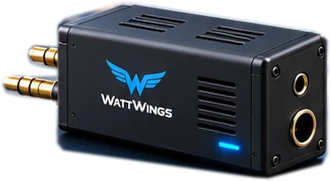
The onboard AI runs on the FAKiA computer. It is designed to process headset and intercom audio, synchronize camera observations, use independent GNSS and consult local aircraft and aviation data without relying on Internet access in flight. The portable design targets about 200 cm³ (11 × 3 × 6 cm).
It sits between the headset and the cockpit audio jacks. Keeping the original receive and microphone paths available through a device or battery failure is a bench-test requirement.
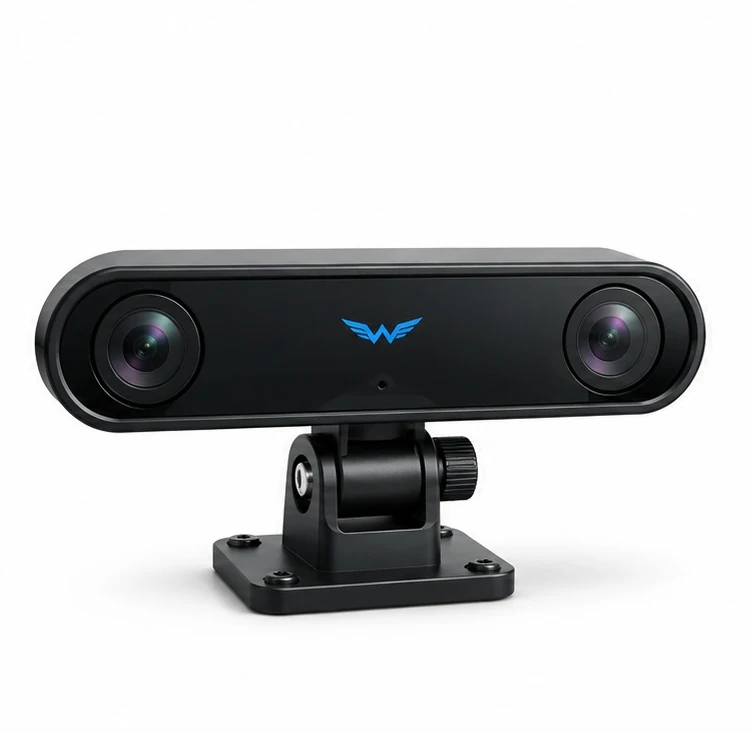
The inward-facing camera is designed to observe visible face, eye and eyelid position, gaze direction and posture. The AI considers phase, workload and visibility when evaluating these cues.
Occlusion or insufficient evidence is recorded as unavailable. A gaze observation is one input to vigilance assessment.
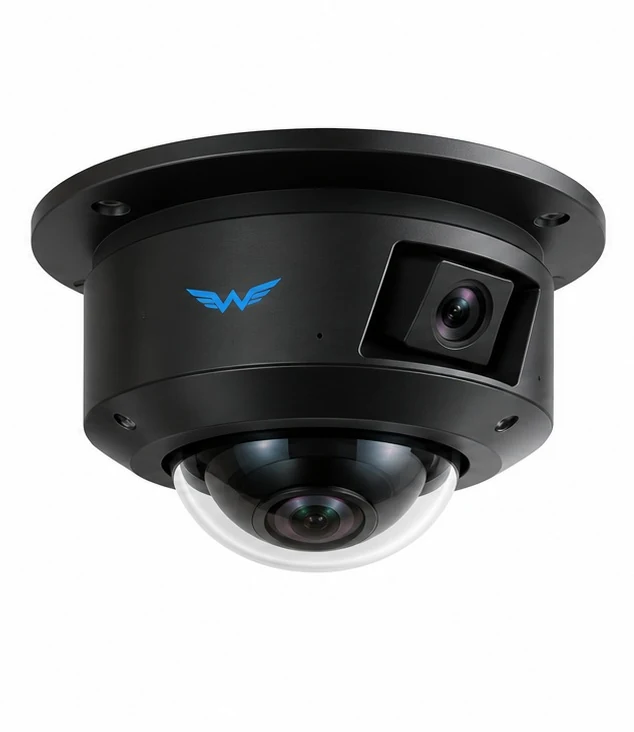
An overhead panoramic camera sees the cabin and the exterior that is visible through the windows. A separate high-resolution camera reads the instrument panel, including analog gauges or glass displays where validated.
Glare, rain, pillars, obstructions and camera alignment affect what is observable. The system keeps the instrument source separate from GNSS.
Design renderings from Product Info, p. 2. CAMVigil and CAM360 form FAKView. The kit design calls for four interchangeable USB-C rechargeable batteries, including a spare.
Removable kit with FAKiA, CAMVigil, CAM360, independent GNSS and optical instrument reading. The headset connection carries audio. Pilot and aircraft use depend on the verified mounting and electrical configuration.
Adds a separate, authorized digital link to the installed glass cockpit. Cross-checks digital indications against the optical and GNSS sources. Compatibility is defined per avionics model, version and installation.
Factory installation designed with the aircraft manufacturer. Uses approved interfaces to sensors, aircraft power and cockpit displays. Each OEM program has its own assurance, integration and approval path.
The catalog covers the whole flight, including engine, fuel, approach and abnormal situations. The Cessna 172S is the test aircraft reference. Each additional aircraft family requires its own profile, interfaces and validation.
Read observable instruments and identify quality or missing data.
Cross-check the phase, flight path, terrain, weather and aircraft configuration.
Relate the clearance and readback, and answer questions from verified context.
Check indications of workload and visual scan in their context.
The planned flight record uses the same event timeline as the in-flight advisory.
FAK is designed to timestamp radio, aircraft observations and position together. Keep camera and audio recording within the operator’s agreed scope.
The review links each flagged event to its observations. For a radio discrepancy, reopen the instruction and the readback. Missing or unreliable intervals remain visible in the timeline.
Review a flight on your own, with an instructor or through an authorized fleet safety process. Define who can replay or retain the data before collecting it.
Get brief, contextual cues about a radio, navigation or configuration discrepancy. Review your flight after landing. Evaluate the kit on a compatible panel before committing to an avionics project.
Give members and instructors a common timeline for authorized recordings, including radio, aircraft indications and relevant events. Trial measures include debrief time, false flags and cost per flight hour.
Evaluate a defined advisory function and a review process on a specific fleet. Connect authorized data to existing safety workflows and review alert burden before any operational use.
The tower sees a different part of the same flight. TFAK is designed to check the controller’s instructions against what aircraft read back and what authorized systems report.
For VFR and lighter IFR traffic. It is designed to match callsigns, retain restrictions, compare readbacks, track the circuit and handoffs, flag inconsistent instructions or possible runway occupancy when supported, and keep a timestamped event log.
For busy VFR and commercial IFR towers. It adds authorized radar/ADS-B and ground inputs, compares plans, clearances and trajectories, follows sectors and handoffs, and ranks inconsistencies by severity and confidence.
| Source | Example at 04:30 |
|---|---|
| ATC instruction | Climb to 2,500 ft. Fly heading 270. |
| Pilot readback | Climb to 3,500 ft. Heading 270. |
| TFAK design | Flag the altitude mismatch. Preserve the matching heading and link both source exchanges. |
The controller issues clearances. The current evidence is a text comparator and a simulated interaction. The proposed deployment starts with authorized replay and silent observation with a navigation service provider.
Perception extracts observations. Flight rules compare them with a versioned aircraft profile and the current situation. Each proposed alert keeps a source, a time and a reason.
This rule extracts an altitude candidate from each transcript. Identical values match. Different values flag a mismatch. A missing or ambiguous value returns insufficient evidence. The rule compares values. Callsign, clearance authority and phase of flight require separate evidence.
outcome: !atc || !pilot
  ? 'INSUFFICIENT'
  : atc.feet === pilot.feet
    ? 'MATCH'
    : 'MISMATCH'
The independent OCR bench extracts candidate characters from a selected frame. The full AI must establish instrument identity, units and provenance before using a value.
Fictional examples. The comparison runs in this browser.
The fleet series differ in scope and year. Aircraft, tower sites and potential OEM accounts are separate denominators. Manufacturer counts cover the screened cohort and do not assert integration eligibility.
| Metric | United States | Europe |
|---|---|---|
| Aircraft population | 213,756FAA CY2024 active general aviation and air taxi aircraft. Includes the full survey categories. | 83,8362022 EASA monitored population: 73,550 aeroplanes plus 10,286 helicopters. Scope differs from FAA. |
| Commercial aircraft | 6,949FAA 2025 commercial aircraft fleet estimate. Separate reporting series. | About 7,000EASA 2025 complex CAT domain, around 7,000 aeroplanes and 627 AOC holders. |
| Control towers | 527FAA FY2024 airport traffic control towers. Contract towers are not an additive count. | 368Indicative match of TWR frequencies against 535 EASA aerodrome codes. No harmonized Europe-wide tower census. |
| Aircraft manufacturer accounts screened | 14Named fixed-wing OEM accounts screened for US programs. Eligibility remains to be qualified. | 10Named fixed-wing OEM accounts screened for European programs. Some groups appear in both markets. |
FAA Aerospace Forecast · FAA Air Traffic by the Numbers · EASA EPAS · EASA Annual Safety Review · EUROCONTROL ACE · EASA Aerodromes · OurAirports TWR · GAMA
Start with owners and clubs. Add installer channels for connected aircraft, then qualifying fleet, ANSP and OEM programs.
Validate regional airspace data, procedures, languages and installation pathways. Work with European operators, ANSPs and OEMs.
Extend qualified aircraft profiles with OEMs and qualified tower workflows with ANSPs in further markets. Local data and operator approvals govern each rollout.
Related products cover different parts of the workflow. WattWings will test the value of aligned cockpit evidence, abstention and clearance checks for each role.
Portable cockpit perception and advisory cross-checks.
Local voice and radio assistance.
Voice and ATC support with terminal-area perception.
Flight context and traffic support via an electronic flight bag.
Briefing, performance and aviation data tools.
AI assistance for a light-aircraft glass cockpit.
Electronic conspicuity and traffic awareness.
Aircraft perception, navigation and autonomy research.
Airline operations, flight-control automation and professional pilot assistance, respectively.
Precommercial pricing hypotheses. Hardware and installation are separate. The financial model keeps recurring subscriptions, setup and factory integration separate.
| Offer | USD | EUR | Billing unit |
|---|---|---|---|
| FAK Private | $49 | €47 | per aircraft per month |
| FAK Club | $149 | €139 | per aircraft per month |
| FAK Pro | $399 | €359 | per connected aircraft per month |
| FAK Fleet | $1,490 | €1 390 | base monthly operator account |
| TFAK1 | $1,500 | €1 390 | per site per month, setup separate |
| TFAK2 | $6,000 | €5 500 | per site per month, integration separate |
| OEM | Program quote | Program quote | Engineering milestones and per-aircraft royalties |
Software checks, ground sessions and planned flight or tower evaluations have separate acceptance criteria.
The founder reports ground sessions at Montpellier and Saint-Cyr and purchase interest conditional on availability. Next milestones are written evaluation protocols, instrumented data and paid orders.
AeroAlpha, a two-leg VFR demo with three camera views, and radio and optical bench components. The displays distinguish simulated and observed data.
The text comparator is executable. The tower interaction is simulated. The next commercial step is an agreement with a navigation service provider to evaluate authorized recordings and measure missed and false flags.
The plan grows through owner and club deployments, authorized avionics interfaces and separate tower and OEM programs. Full regional revenue, cost and cash schedules support the investor deck.
Validate radio continuity and the first aircraft profile. Compare event extraction with human annotation. Build the TFAK radio evaluation set.
Test willingness to pay and repeatable installations. Add aircraft profiles and start authorized tower replay and shadow evaluations.
Add validated fleet programs, dense-traffic evaluation and factory projects where operators and manufacturers accept the defined scope.
| Year | US FAK aircraft | Europe FAK aircraft | US TFAK sites | Europe TFAK sites | US revenue | Europe revenue |
|---|---|---|---|---|---|---|
| 2027 | ||||||
| 2028 | ||||||
| 2029 | ||||||
| 2030 | ||||||
| 2031 |
Paid activations depend on qualified leads, conversion, installation capacity and retention. Factory aircraft are counted separately. This scenario is conditional on validation, contracts and available capital.

I designed Flight Awake and develop WattWings’ software myself with AI-assisted development tools. I define the aircraft logic, build the code and check its behavior in concrete flight scenarios.
I founded Diderot Éducation and developed a ten-campus network. At WattWings I am looking for an aircraft integration engineer to assemble and mount the kit, verify the audio and power interfaces, and prepare instrumented trials.
Aircraft owners, clubs, fleets, air navigation providers and manufacturers can discuss a trial on a defined configuration.
aldrick@wattwings.co